

Looking to learn Spanish from scratch? This Complete Guide to Learning Spanish from Scratch, is the ideal place to start. Spanish is one of the most spoken languages in the world, and learning it can open the door to exciting travel experiences, career opportunities, and meaningful cultural connections. With over 500 million speakers globally, mastering Spanish is both a valuable and rewarding goal.
Learning a new language from zero is one of the most enriching intellectual journeys you can take. It’s not just about memorising vocabulary or grammar — it’s about discovering a new way of thinking, expressing yourself, and connecting with people across continents. Spanish is spoken in 21 countries and is the second most spoken native language after Mandarin Chinese. It’s a practical, beautiful, and culturally rich language that continues to grow in global importance.
This complete guide to learning Spanish will take you step by step from the basics to practical communication. Whether you’re a total beginner or just starting to explore how to learn Spanish effectively, this resource will help you build strong foundations and achieve real fluency.
1. Mindset and Preparation: What You Need to Know Before Learning Spanish
“Learning Spanish isn’t a sprint — it’s a marathon.”
One of the most common mistakes beginners make when they learn Spanish from scratch is getting frustrated because progress isn’t as fast as expected. Remember, learning Spanish is a non-linear journey, full of ups and downs — some days you might feel you know nothing, while others you’ll be surprised by how much you understand.
Tips for beginners learning Spanish from scratch:
Following these tips will help you learn Spanish from scratch efficiently and enjoyably, setting a solid foundation for real communication.
- Identify your reason to learn Spanish. Whether it’s for travel, work, culture, love, or personal interest, having a clear goal keeps you motivated throughout your language learning journey.
- Be patient with your progress. Language learning takes time, and improvement isn’t always immediately visible.
- Embrace mistakes as part of learning. Errors help you improve and get better at Spanish.
- Incorporate Spanish into your daily life. Don’t treat it as a separate task—immerse yourself in the language regularly.
- Start with the basics. Don’t rush to speak fluently right away. Building a strong foundation reduces errors later.
- Create a consistent routine. Dedicate at least 15–30 minutes every day to practicing Spanish. Consistency beats occasional long sessions. Regular classes also boost progress.
- Use Spanish from day one. Speak with whatever words or phrases you know — practice makes perfect.
- Keep organised notes. Maintain separate notebooks for vocabulary and grammar to track your learning effectively.
2. Essential Spanish Basics: Begin with the Fundamentals
The Spanish Alphabet and Its Sounds
Spanish consists of 27 letters, including some unique letter combinations like “ll”, “ch” and “rr” that produce distinct sounds. One of the great advantages of Spanish is its consistent phonetic system — generally, words are pronounced exactly as they are spelled, unlike English or French.
For example:
- “Casa” is pronounced /ˈka.sa/
- “Zapato” is pronounced /saˈpa.to/
The Role of Accents (Tildes)
Accents in Spanish indicate the stressed syllable and can change the meaning of words entirely:
- papa (potato) vs papá (dad)
- tú (you) vs tu (your)
- sí (yes) vs si (if)
It’s important to pay attention to these accents from the very start, as overlooking them can alter the meaning of a sentence completely.
3. Vocabulary: Establish a Strong Base with Practical Words
Memorising isolated words isn’t as effective as learning vocabulary within a meaningful context. Avoid cramming long, unrelated word lists. Instead, focus on themed vocabulary and full sentences.
Key beginner topics to focus on:
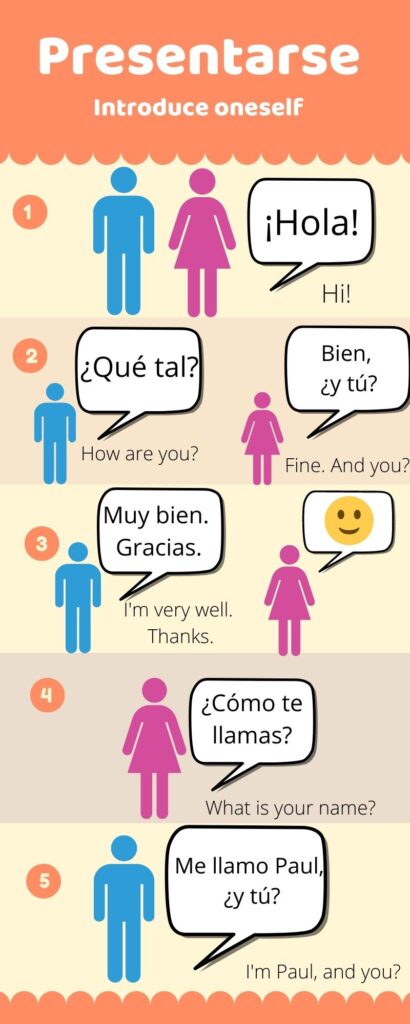
- Introducing yourself: name, age, nationality, job.
- Family members: mother, father, brother, grandmother, cousin.
- Days of the week, months, and seasons: Monday, January, summer, etc.
- Food and drinks: bread, rice, apple, milk, water.
- Common verbs: ser (to be), estar (to be), tener (to have), ir (to go), gustar (to like), poder (can), querer (to want), hacer (to do/make).
Recommended approach: Apply the 80/20 principle — learn the 20% of words that appear in 80% of everyday conversations.
4. Practical Spanish Grammar: Start Learning from Day One
Grammar shouldn’t hold you back — it’s a tool to help you communicate. Focus on learning the structures that let you express yourself right from the start.
Basic Spanish sentence structure:
Subject + verb + complements
“I speak Spanish.”
“She lives in Madrid.”
Verbs: the core of the language
Conjugating verbs is crucial, but don’t overwhelm yourself by trying to learn all forms at once. Begin with the most common verbs in the present tense.
Regular verbs:
Hablar (to speak): yo hablo, tú hablas, él habla…
Comer (to eat): yo como, tú comes…
Vivir (to live): yo vivo, tú vives…
Frequently used irregular verbs:
Ser (to be): yo soy, tú eres…
Estar (to be): yo estoy, tú estás…
Tener (to have): yo tengo, tú tienes…
5. Active Listening Skills: How to Train Your Ear for Spanish
Immersing yourself in authentic Spanish listening is one of the most effective habits you can develop.
What does active listening involve?
It’s more than just hearing sounds — it means focusing closely, recognising vocabulary, and even repeating aloud what you hear.
Suggested activities:
- Tune into podcasts and practise repeating phrases out loud.
- Watch TV shows or films with Spanish subtitles.
- Use YouTube videos, pausing and rewinding to catch every word.
Beginner-friendly recommendations:
- Extra en español (an educational series).
- Easy Spanish (street interviews with subtitles).
- SpanishPod101 (available on YouTube and as podcasts).
6. Reading in Spanish: How to Get Started
Reading helps expand your vocabulary, improve spelling, deepen your understanding of grammar, and enhance your ability to communicate.
What should you start reading?
- Children’s books or graded readers suited to your level.
- Comics, which are more visual and easier to follow.
- Spanish learner news sources, such as News in Slow Spanish.
Effective reading strategies:
- Highlight unfamiliar words.
- Create a vocabulary list with definitions.
- Summarise each paragraph using your own words.
7. Using Writing to Develop Your Spanish Thinking Skills
Writing is a fantastic way to practise what you know and identify areas for improvement.
Ideas to get started:
- Keep a daily or weekly journal.
- Describe your day, routine, or family.
- Write simple messages on forums or social media in Spanish.
- Take part in written language exchanges (using apps like Tandem or HelloTalk).

8. Speaking Spanish: The Most Challenging Yet Crucial Stage
Speaking pushes you to actively use the language, think on your feet, and put your knowledge into practice. Don’t wait until you feel more confident—start speaking from day one.
How to Overcome the Fear of Speaking
- Speak out loud to yourself regularly.
- Practice simple phrases every day.
- Use platforms to connect with native speakers or tutors (e.g., Italki, Preply).
- Join online language exchange groups (such as Speaky or ConversationExchange).
9. Learning Through Context and Emotional Connection
Research shows that we learn more effectively when we feel excited or genuinely interested. So don’t restrict yourself to textbooks or formal lessons — use your passions as a driving force for learning.
Examples:
- Enjoy cooking? Follow Spanish-language recipe channels.
- Are you a gamer? Play video games in Spanish or switch the language settings.
- Interested in history? Watch documentaries about Latin America or Spain.
The more personal your connection to the language, the faster you’ll progress.
10. How to Organise Your Study: Effective Methods and Structure
Recommended Weekly Plan for Beginners:
From Monday to Friday:
- 10 minutes of vocabulary practice
- 15 minutes of reading
- 15 minutes of listening
- 10 minutes of writing
- 10 to 20 minutes of speaking practice (alone or with a partner)
Fines de semana:
- Ver una película o episodio en español
- Hacer una revisión de lo aprendido
- Preparar nuevos objetivos semanales
11. Language Levels and How to Assess Your Progress
The Common European Framework of Reference for Languages (CEFR) divides language learning into six levels:
- A1: Beginner user
- A2: Elementary user
- B1: Independent user (intermediate)
- B2: Proficient independent user (upper-intermediate)
- C1: Competent user (advanced)
- C2: Native or bilingual proficiency

Recommended Assessments:
- Take online tests (such as those offered by the Instituto Cervantes or the DELE exam).
- Record yourself speaking every month and track your progress.
- Request feedback from native speakers.
12. Common Mistakes and How to Avoid Them
- Waiting until you feel “ready” to speak. You’ll never feel 100% prepared — just start speaking.
- Translating everything in your head. Train yourself to think directly in Spanish.
- Focusing only on grammar. Grammar without context won’t help you communicate effectively.
- Skipping review sessions. Repetition is crucial for cementing your learning.
In this post, we provide detailed insights into the most common mistakes made in Spanish and offer practical tips to help you avoid them.
13. Recommended Resources (Up-to-Date)
Apps:
Duolingo
Memrise
Anki (custom flashcards)
LingQ
Online Class Platforms:
Italki
Preply
Baselang (unlimited classes)
YouTube Channels:
Español con Juan
Dreaming Spanish
Butterfly Spanish
Books for Beginners:
Madrigal’s Magic Key to Spanish
Practice Makes Perfect: Spanish Verb Tenses
First Spanish Reader
Complete Guide to Learning Spanish from Scratch: Summary
The journey to learn Spanish from scratch is long, yes, but absolutely achievable. It doesn’t matter if your native language is English, French, German, or any other — Spanish is full of logical patterns, clear pronunciation, and a global community ready to support you. Remember, consistency, practice, and real language exposure are your greatest allies.
Don’t compare yourself to others, don’t strive for perfection, and most importantly, enjoy the process. Every word you learn is a victory.
If you’re interested in taking your Spanish learning further, you can find a variety of excellent Spanish courses at the following link. Whether you’re a beginner or looking to improve, there’s something for everyone to help you progress confidently.
You can do it! Keep going, and embrace your Spanish journey!
Aprende español con nuestros cursos y clases
- CEFR online Spanish courses
Spanish Online Course for Beginners – Level A1.1
110,00€ Select options This product has multiple variants. The options may be chosen on the product page - CEFR online Spanish courses
Spanish Course Level A1.2
110,00€ Select options This product has multiple variants. The options may be chosen on the product page - CEFR online Spanish courses
Online Spanish Course Basic Level – A2.1
110,00€ Select options This product has multiple variants. The options may be chosen on the product page