

Understanding the differences between Spanish from Spain and Latin America can be useful when studying Spanish as a foreign language, especially when reading articles from Latin American countries, watching TV series, or listening to podcasts.
This language, also known as Castilian, is spoken by more than 580 million people worldwide. Although it has a common foundation, there are significant differences between the varieties spoken in Spain and those used in Latin American countries.
These differences affect not only vocabulary, but also pronunciation, grammar, and the way people interact. Therefore, in this text, we will take an in-depth look at the main differences in this language. Understanding these variations is essential for both students and native speakers who seek to improve their communication and comprehension in international contexts.
1. Historical Roots of the Variation
Before analyzing the specific differences, it is important to understand why this linguistic diversity exists within the same language.
Spanish colonization of the American continent began in 1492. The colonizers brought with them medieval Castilian Spanish, which was adopted and adapted by the indigenous populations and by the new generations born on the continent. Over time, the regions became isolated from each other, allowing local dialects to develop.
In addition, indigenous languages (such as Nahuatl, Quechua, Guaraní, among others) and later other foreign languages (such as English, French, and Italian) influenced the ways of speaking in different areas.
At the same time, the peninsular area also evolved, especially in certain regions such as Andalusia and Madrid. Thus, a natural differentiation between European and American varieties was created.
2. Pronunciation or Phonetics
One of the most obvious differences is in pronunciation.
a) Seseo and Ceceo
In most Latin American countries, speakers do not distinguish between the sounds of “s” and “z” or “c” (when “c” comes before “e” or “i”). This is known as seseo.
- For example:
- In countries like Mexico or Argentina, cielo and sielo are pronounced identically.
- In contrast, in central and northern Spain, cielo is pronounced /θjelo/, using a “th” sound similar to that in the English word think.
In some southern regions such as Andalusia, the opposite phenomenon even occurs: a phenomenon called ceceo, where “s” is pronounced as /θ/, like a “z” or soft “c”.
b) Aspiration and Omission of Final “s”
In several regions of Latin America, especially in the Caribbean and some areas of the Pacific coast, the final “s” of a syllable or word can be aspirated or eliminated.
- Example:
- In Cuba or the Dominican Republic, los amigos may sound like loh amigo or even lo amigo.
- In contrast, this final “s” is clearly pronounced in most varieties of Spanish spoken in Spain.
c) Pronunciation of “ll” and “y” (Yeísmo)
Yeísmo is the term used when there is no distinction in pronunciation between the letters “ll” and “y”.
- In nearly all of Latin America, as well as much of Spain, words like llave and yate are pronounced the same.
- However, in the Río de la Plata region (notably in Argentina and Uruguay), these sounds take on a pronunciation similar to the English “sh”, so lluvia is often pronounced shuvia.
3. Vocabulary or Lexicon
Vocabulary is where the differences are most noticeable. Many words have different meanings or are not used at all in certain regions.
a) Different Terms for the Same Thing
- Coche versus carro or auto.
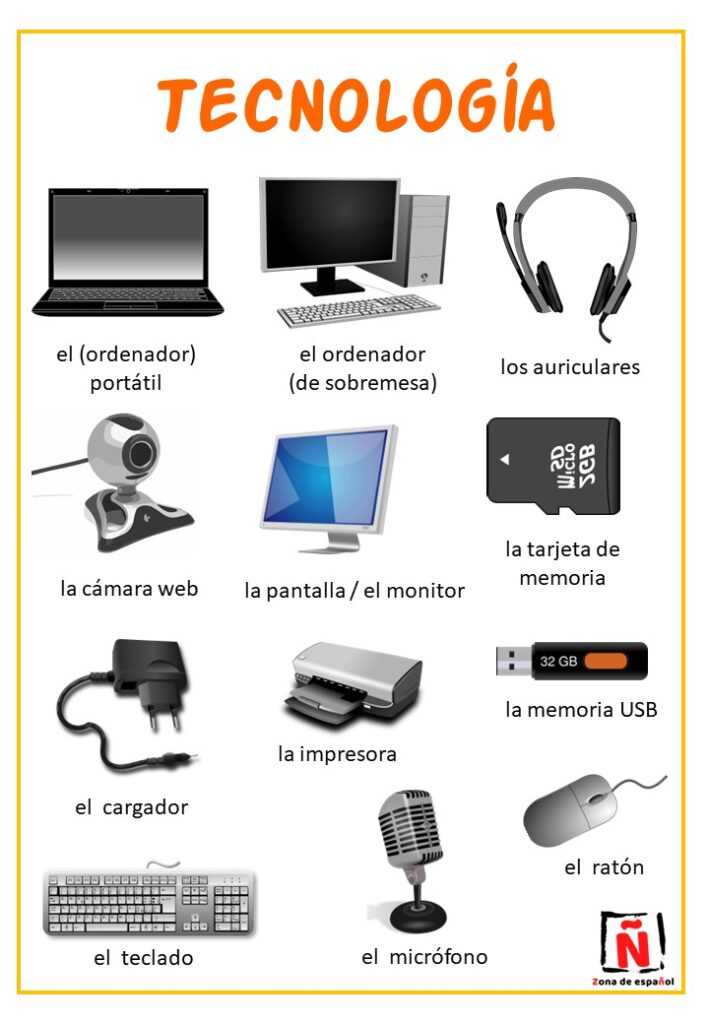
- Ordenador versus computadora.
- Zumo versus jugo.
- Conducir versus manejar.
- Móvil versus celular.
b) Words with Varying Meanings
- In Spain, torta means a slap or a hit, while in Mexico and Argentina it’s a type of sandwich.
- Piso in Spain refers to an apartment, whereas in Latin America departamento is more commonly used.
- Guagua means a bus in the Canary Islands, Cuba, and the Dominican Republic, but in Chile, it refers to a baby.
c) Indigenous or Regional Words
In Latin America, it is common to find words taken from indigenous languages:
- Choclo (corn, from Quechua).
- Canoa (from Taíno).
- Jaguar, tiburón (shark), and papaya are also of Amerindian origin.
The following link provides many more examples of words originating from indigenous languages.

4. Use of Pronouns and Formality
a) Vosotros versus Ustedes
In Spain, vosotros is used as the informal second-person plural pronoun, while ustedes is reserved for formal situations. However, in Latin America, ustedes serves as both the formal and informal second-person plural.
- Spain:
- “¿Vosotros vais al cine?”
- Latin America:
- “¿Ustedes van al cine?”
b) The Use of Vos (Voseo)
In countries like Argentina, Uruguay, Paraguay, parts of Bolivia, Nicaragua, and Honduras, vos replaces tú in informal speech.
- Tú hablas becomes Vos hablás
- Tú tienes becomes Vos tenés
This involves a different set of verb conjugations, which can be tricky for learners new to Spanish.
5. Grammar and Sentence Structure
While the fundamental grammar remains consistent, there are some key differences.
a) Use of the Present Perfect Tense
The present perfect tense (for example, he comido, he salido) is commonly used to describe recent actions.
- Spain:
- “Hoy he visto una película.”
- Latin America:
- “Hoy vi una película.”
In most Latin American countries, however, the simple past tense is generally preferred, even when referring to events that have just occurred.
b) Leísmo
In certain areas, particularly in the central region, leísmo is a common phenomenon. This involves using le instead of lo or la as direct object pronouns when referring to masculine people.
- Spain:
- “¿Has visto a Juan? Sí, le vi ayer.”
- Latin America:
- “¿Has visto a Juan? Sí, lo vi ayer.”
While the Royal Spanish Academy (RAE) recognises leísmo in some cases, it is not considered standard usage in Latin America.
6. Intonation and Rhythm
The melody varies greatly depending on the region.
- The intonation tends to be more pronounced, with noticeable rises and falls in pitch.
- Caribbean is spoken at a quicker pace, often omitting the final syllables of words.
- Andean is generally slower and characterised by a more level tone.
- Rioplatense, spoken in Argentina and Uruguay, has a unique rhythm influenced by Italian, due to large waves of immigration during the 20th century.
These variations affect oral comprehension. A person who has learned in Europe may have difficulty understanding the accent of Venezuela or Chile, and vice versa.
7. Idioms and Colloquial Expressions
Each region has its own unique phrases and informal expressions. Familiarity with them can make the difference between sounding natural and sounding overly formal or “textbook”.
Examples:
- Spain:
- Estar hecho polvo means to be completely exhausted.
- Ser un chaval refers to being a young person.
- Mexico:
- ¡Qué padre! is an enthusiastic way to say “That’s awesome!” or “How cool!”
- Ahorita can mean right now, soon, or sometimes never, depending on the context.
- Argentina:
- Che, boludo is a casual expression often used among friends.
- Estar al horno means to be in trouble or facing a difficult situation.
8. Media and the Standardisation of Spanish
Latin American dominates in terms of number of speakers. That’s why many international films, series, books, and translations tend to use a neutral or Latin American style.
International networks such as CNN, BBC Mundo, and Netflix often produce content that uses neutral Latin American Spanish to facilitate understanding throughout Latin America.
Is There a “Correct” Spanish?
This is a common question among students. The answer is: there is no single correct Spanish. All variants are equally valid. The important thing is to be aware of the differences, especially if you plan to live, work, or study in a specific country.
The recommendation: choose a variety according to your needs and preferences, but stay exposed to other variants to improve your overall understanding.
What are the main differences between the languages?
This is a rich, vibrant, and diverse language. The differences between European and Latin American Spanish reflect centuries of history, cultural mixing, and identity. Although these variations may seem confusing at first, they also make the language vibrant and fascinating.
As a student or speaker of the language, it is helpful to adopt an open and flexible mindset. Understanding the differences not only improves your language skills, but also broadens your view of the Spanish-speaking world. Whether you say computadora or ordenador, ustedes or vosotros, the important thing is that you can communicate with millions of people around the world.
If you are interested in learning the language, come and find out about our courses and private classes. You can find more information about the courses here, and more information about our private classes here. Start learning now.
If you’re interested in learning Spanish from Spain, come check out our courses and private Spanish lessons. You can find more information about the courses here, and more information about our private lessons here.
Long live this beautiful language, in all its forms!
Aprende español con nuestros cursos y clases
- CEFR online Spanish courses
Spanish Online Course for Beginners – Level A1.1
110,00€ Select options This product has multiple variants. The options may be chosen on the product page - CEFR online Spanish courses
Spanish Course Level A1.2
110,00€ Select options This product has multiple variants. The options may be chosen on the product page - CEFR online Spanish courses
Online Spanish Course Basic Level – A2.1
110,00€ Select options This product has multiple variants. The options may be chosen on the product page