

Top films and TV series to learn Spanish offer much more than just entertainment: they open the door to the living, authentic, and everyday language. Learning a language is a journey that goes far beyond memorising grammar rules or translating phrases. It involves immersing yourself in a different way of thinking, understanding a culture, and learning to express ideas and emotions naturally.
With over 500 million speakers worldwide, Spanish is a language rich in nuances, regional variations, and local expressions. Attending classes or studying online is not enough to master it fully. Listening extensively is essential, and one of the most effective tools—especially for developing practical listening skills—is audiovisual content.
Through films and series, you can improve your listening comprehension, familiarise yourself with the many accents of the Spanish-speaking world, discover colloquial expressions, and gain a deeper understanding of the culture, history, and values of the diverse countries where Spanish is spoken.
Why watch films and series to learn Spanish?
1. Exposure to authentic language
Films and series use natural language that is much closer to everyday speech than the often artificial audio found in many language courses. This exposure allows you to hear the language in a variety of styles—formal, informal, humorous, tragic, youthful, technical, and more.
2. Variety of accents and expressions
Spanish varies significantly from country to country. For example, Spain uses “vosotros,” whereas Latin America prefers “ustedes.” Argentina employs “voseo” (“vos tenés”), Mexico often uses diminutives, and Chile is known for its local slang. Watching content from different countries helps develop a more adaptable ear.
3. Culture and history
Every film or series reflects its social context. Watching a Spanish film set in the post-war period reveals as much about the language as it does about the historical moment. A Colombian series can teach you more about life in Medellín than any textbook.
4. Emotional and contextual learning
When you learn a word while watching a dramatic scene, a comedy, or a romantic moment, that word becomes linked to an emotion, making it easier to remember.
Effective ways to learn Spanish through films and series
Select content that matches your current level. Avoid diving into difficult films at the start. Choose material that keeps you engaged without causing frustration.
- Select content that matches your current level. Avoid diving into difficult films at the start. Choose material that keeps you engaged without causing frustration.
- Enable Spanish subtitles. Following the text while listening helps link sounds with their written form.
- Watch scenes twice—first to grasp the overall meaning, then to focus on specific vocabulary.
- Pause and rewind as needed. Don’t hesitate to replay phrases that interest you.
- Maintain a learning journal. Note down new words, idioms, and expressions that you find useful.
Top movies for learning Spanish
🔰 Beginner Level
Films featuring straightforward language, slow-paced dialogue, and easy-to-understand themes.
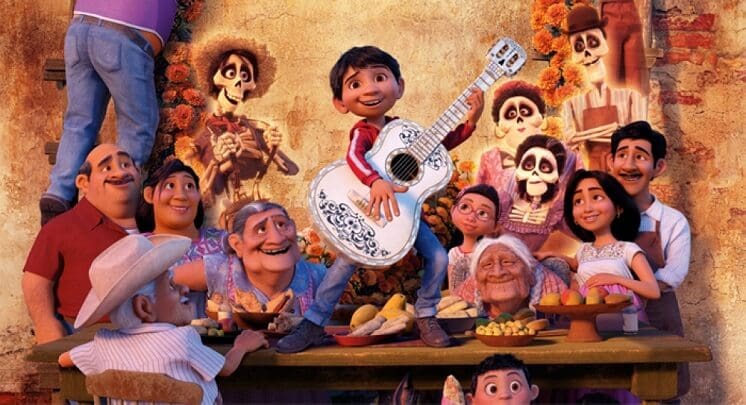
1. Coco (Mexico/USA, 2017)
Despite being a Pixar film, the Latin American Spanish dub is carefully crafted. The conversations are clear, and the cultural backdrop (Day of the Dead) is captivating. Perfect for beginners to get acquainted with basic Mexican Spanish.
2. El Libro de la Vida (Mexico/USA, 2014)
Set against the backdrop of the Day of the Dead festival, this animated film tells the story of Manolo, a young man caught between fulfilling his family’s wishes and following his love for music. The Latin American Spanish dub features everyday language and short, easy-to-follow sentences. Many of the dialogues are delivered at a slow pace, and the songs help reinforce common colloquial phrases. With its vibrant and emotional plot and clear cultural elements, it’s a great option for learners seeking simple Spanish in an engaging story.
3. La misma luna (México, 2007)
Una emotiva historia sobre un niño que cruza la frontera para reunirse con su madre. Los diálogos son claros y pausados, ideales para principiantes.
4. El camino (España, 1963)
Basada en una novela de Miguel Delibes, ofrece un retrato sencillo de la vida rural española. El lenguaje es lento y cuidado, aunque incluye formas regionales y más antiguas del español castellano.
🟡 Intermediate Level
A wider range of accents, increased use of everyday expressions, and conversations at a natural pace.
1. El secreto de sus ojos (Argentina, 2009)
This psychological thriller blends romance, crime, and politics. It features the Rioplatense accent, known for its unique intonation and use of voseo.
2. Volver (Spain, 2006)
A Pedro Almodóvar film with a Manchegan accent and modern peninsular Spanish. It deals with themes like family, loss, and forgiveness. Perfect for tuning your ear to Spain’s Spanish.
3. Machuca (Chile, 2004)
Set in 1970s Santiago, this film offers insight into Chilean history and the fast-paced, slang-rich Chilean Spanish.
4. También la lluvia (Spain/Bolivia, 2010)
Follows a film crew making a movie about Columbus in Bolivia during actual social protests, highlighting differences between peninsular and Andean Spanish.
🔴 Advanced Level
Challenging conversations, advanced grammar usage, and rich cultural context.
1. Relatos salvajes (Argentina, 2014)
A collection of short stories blending dark humour and drama, with a wide range of speaking styles. Understanding the Argentine tone and irony requires a high level of Spanish.
2. Todo sobre mi madre (España, 1999)
A classic from Almodóvar that delves into themes like motherhood, identity, and grief. It features rich emotional dialogue and metaphorical expressions that demand advanced comprehension.
3. Amores perros (México, 2000)
An intense, multi-layered narrative filled with urban Mexican Spanish and street slang. A great challenge for advanced learners wanting to immerse themselves in realistic language.
4. Roma (México, 2018)
Though spoken slowly, the film offers nuanced, symbolic language and deep cultural elements. Ideal for exploring the differences between formal, everyday Spanish and indigenous influences.
Top Spanish Series to Boost Your Language Skills
🟢 For Beginners
1. Pocoyó (Spain)
A children’s show with straightforward and easy-to-understand language, perfect for beginners starting out with Spanish.
2. Destinos: An Introduction to Spanish (USA)
Tailored for learners, each episode combines drama with repeated phrases and clear grammar explanations.
3. Extra (Spain)
A Spanish sitcom similar to Friends, designed specifically for language learners, featuring practical vocabulary and common everyday scenarios.
🟡 Intermediate
1. Club de Cuervos (México, Netflix)
Set in the world of football, it is a mix of drama, comedy, and business satire. The Mexican Spanish spoken is modern and varied.
2. Merlí (Spain/Cataluña)
Although partially in Catalan, it is an excellent introduction to the Spanish of Spain among young people. It covers themes of philosophy, friendship, and education.
3. Velvet (Spain)
Set in an elegant fashion store in the 1950s, this series combines everyday dialogues with more formal and expressive language. It is useful for intermediate learners who want to become familiar with Spanish from different registers, as well as enjoy a romantic and dramatic story.
4. El Ministerio del Tiempo (Spain)
A historical adventure with time travel. Ideal for those who want vocabulary that is both modern and historical.
🔴 Advanced Level
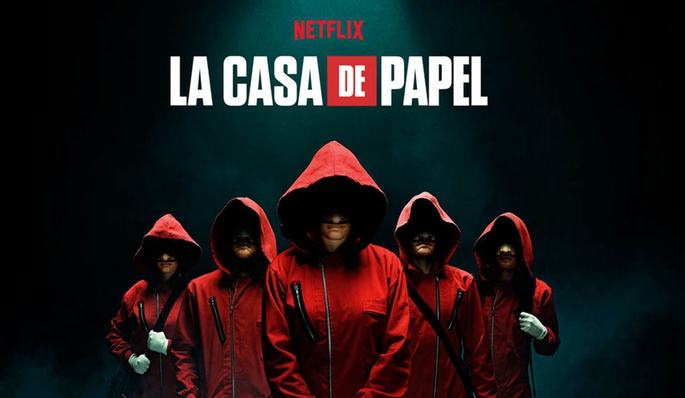
1. La Casa de Papel (Spain, Netflix)
Modern Peninsular Spanish featuring plenty of slang, cultural references, and variations in language style. It’s both popular and highly addictive.
2. Narcos (Colombia, Netflix)
While some actors speak Spanish with non-native accents, the majority are Colombian. The series features crime-related vocabulary alongside intricate storytelling.
3. Élite (Spain, Netflix)
A teenage drama set in an exclusive private school. Perfect for picking up youth slang, informal language, and authentic social interactions.
Other Helpful Platforms for Learning Through Audiovisual Content
Netflix: Great for its subtitle and speed adjustment features, as well as its wide selection of series and movies.
Lingopie: A platform focused on language learning using TV shows.
YouTube: Numerous channels provide scene breakdowns in Spanish along with various audiovisual materials.
RTVE Play / Canal Once / Filmin: Platforms that offer Spanish-language content, either free or through a subscription.
Summary
Studying Spanish through movies and TV shows is an enjoyable, effective, and culturally rich way to enhance your language skills. Beyond just grammar and vocabulary, each film and series provides insight into the culture and spirit of a community. Whether it’s the everyday language found in a Spanish teen drama or the deep philosophical dialogues in an Argentine series, every scene can serve as a valuable lesson in both language and culture.
Incorporate this approach into your daily routine: watch about 20 minutes each day, practice repeating phrases, jot down notes, and immerse yourself in the language regularly. Over time, you’ll find yourself not only understanding more but also thinking directly in Spanish.
Now is the perfect moment to continue your learning journey. Start a Spanish film or series and immerse yourself in the world of Spanish speakers!
If you’re looking for private Spanish lessons or Spanish online courses to advance further, our language school offers a range of options. Check out our website for more details!
Aprende español con nuestros cursos y clases
- CEFR online Spanish courses
Spanish Online Course for Beginners – Level A1.1
110,00€ Select options This product has multiple variants. The options may be chosen on the product page - CEFR online Spanish courses
Spanish Course Level A1.2
110,00€ Select options This product has multiple variants. The options may be chosen on the product page - CEFR online Spanish courses
Online Spanish Course Basic Level – A2.1
110,00€ Select options This product has multiple variants. The options may be chosen on the product page