

In today’s guide, you’ll discover 12 of the best shows to help learn Spanish on Netflix, along with practical strategies to make your viewing time an effective language-learning experience instead of just entertainment.
Learning Spanish isn’t only about memorizing grammar rules or studying endless vocabulary lists. While these are important, achieving real fluency requires regular exposure to authentic Spanish in everyday situations. That’s why many Spanish teachers recommend combining formal lessons with real-world content such as podcasts, films, and especially television series.
Streaming platforms have completely changed the way people learn languages. Among them, Netflix has become one of the most popular resources for students looking to improve their Spanish from home. Watching shows to help learn Spanish allows you to hear natural conversations, become familiar with different accents and speaking speeds, expand your vocabulary, and understand how native speakers communicate in real life. At the same time, you’ll gain valuable insights into the cultures of Spain and Latin America, making the learning process far more engaging and enjoyable than traditional study methods alone.
That said, not every TV series is suitable for language learners. Some feature highly specialized vocabulary, while others contain extremely fast dialogue, heavy slang, or regional expressions that can make comprehension difficult, particularly for beginners and intermediate students. Choosing the right series—and knowing how to watch it effectively—can make a significant difference in your progress.
In this article, we’ve selected 12 excellent shows to help learn Spanish, explaining what language skills each one can help you develop. You’ll also find expert tips used by experienced Spanish teachers so you can get the most out of every Netflix episode and turn your favorite series into a powerful learning tool.
Why Are Shows One of the Best Ways to Learn Spanish?
Watching TV series offers advantages that traditional textbooks simply can’t match. Instead of scripted dialogues created for educational purposes, television shows expose learners to authentic conversations between native speakers in realistic situations. You’ll hear how people naturally express emotions, solve problems, joke with friends, and communicate in everyday life—the same kinds of interactions you’ll encounter when traveling or speaking Spanish yourself.
This authentic exposure helps bridge the gap between classroom Spanish and real-world communication.
Some of the biggest benefits of watching shows to help learn Spanish include:
- Improving listening comprehension.
- Learning modern, practical vocabulary.
- Picking up common idioms and everyday expressions.
- Becoming familiar with different speaking styles and language registers.
- Improving pronunciation by listening to and imitating native speakers.
- Understanding cultural references and social customs that textbooks often overlook.
- Building confidence by regularly hearing real conversations.
Another important advantage is that stories provide meaningful context. Because your brain connects new words with characters, emotions, and memorable situations, vocabulary becomes much easier to remember. Rather than translating every sentence, you gradually begin to understand Spanish naturally, making the learning process more intuitive, enjoyable, and effective.
Expert Tips to Learn Spanish with Netflix Shows
Watching Netflix can be an excellent way to improve your Spanish, but you’ll get the best results if you approach it with a learning strategy. Instead of watching passively, use the following techniques to turn the best shows to help learn Spanish into a powerful language-learning resource.
1. Choose Shows to help learn Spanish
One of the most common mistakes is starting with a series that’s too difficult simply because it’s popular. If you understand very little of what’s happening, you’re more likely to become discouraged and give up.
Choose shows that fit your current level instead:
- A1–A2 learners: Family dramas, sitcoms, and light-hearted series with simple, everyday conversations.
- B1–B2 learners: Crime dramas, thrillers, and series with richer vocabulary and more complex dialogue.
- C1–C2 learners: At this stage, almost any Spanish-language series can help you continue improving your listening skills.
Selecting the right level keeps learning enjoyable while gradually increasing your confidence.
2. Shows to Help Learn Spanish: Watch with Spanish Subtitles
Many language teachers recommend avoiding subtitles in your native language whenever possible. Although they may seem helpful at first, they often stop you from fully listening to Spanish.
Spanish subtitles are a much better choice because they allow you to connect spoken and written language, reinforce spelling, and learn new vocabulary naturally. If you’re using shows to help learn Spanish, this simple change can make a significant difference.
3. Don’t Translate Every Single Word
You don’t need to understand every word to improve your Spanish.
Instead of pausing constantly to use a dictionary, focus on understanding the main idea of each scene. Context, body language, and the storyline often make the meaning clear. As you continue watching, you’ll naturally begin to recognize recurring words and expressions without translating them.
4. Watch Important Scenes More Than Once
Don’t be afraid to replay difficult conversations.
A scene that seems impossible to understand the first time often becomes much clearer after two or three viewings. Many Spanish teachers also recommend pausing the episode and repeating the characters’ lines aloud. This technique helps improve pronunciation, rhythm, intonation, and speaking confidence.
5. Keep a Vocabulary Notebook
Every episode introduces useful words and expressions, but you don’t need to write down everything you hear.
Instead, choose five to ten new words or phrases that you think you’ll actually use. Review them regularly and try to include them in conversations or writing exercises. Active practice helps you remember new vocabulary much more effectively.
6. Practice Every Day
Consistency is one of the keys to language learning.
Watching shows to help learn Spanish for just 20 to 30 minutes each day is usually more effective than watching several hours once a week. Regular exposure helps your brain become familiar with Spanish pronunciation, sentence patterns, and everyday vocabulary.
What Spanish Level Do You Need?
Many learners ask when they should start watching Spanish-language series.
The answer is simple: the sooner, the better.
Even beginners can benefit from listening to authentic Spanish. Although you won’t understand every conversation at first, your ears will gradually adapt to the sounds, rhythm, pronunciation, and intonation of the language.
The important thing is to choose content that’s appropriate for your current level. This keeps you motivated and allows you to improve steadily without becoming overwhelmed.
Now, let’s explore some of the best shows to help learn Spanish available on Netflix and discover how each one can help you develop your Spanish skills.
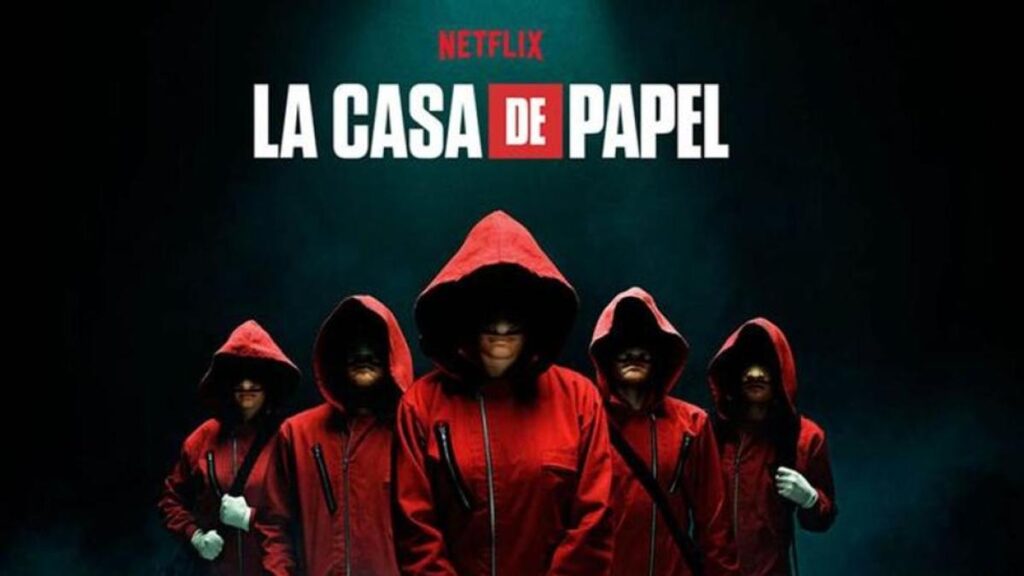
1. La Casa de Papel (Money Heist)
If you’re searching for shows to help learn Spanish, La Casa de Papel (Money Heist) is one of the best places to start. This internationally acclaimed Spanish series combines suspense, action, and unforgettable characters, making it both highly entertaining and an excellent resource for language learners.
Although some conversations move at a fast pace, the series exposes you to authentic Spanish from Spain, allowing you to hear how native speakers communicate in a variety of real-life situations. As the story unfolds, you’ll become familiar with different speaking styles, levels of formality, and natural conversational patterns.
What Will You Learn?
La Casa de Papel is full of useful everyday expressions that native speakers use in Spain. Alongside informal conversations between the main characters, you’ll also hear more formal language used by police officers, investigators, negotiators, and government officials. This combination makes the series ideal for expanding both your conversational and professional vocabulary.
You’ll also learn words and phrases related to emotions, teamwork, leadership, strategic planning, personal relationships, and conflict resolution—all presented in realistic contexts that make new vocabulary easier to understand and remember.
Recommended Spanish Level
B1–B2 (Intermediate).
This series is best suited to intermediate learners. If you watch with Spanish subtitles, you’ll be able to follow the storyline more easily while improving your listening comprehension. Thanks to its engaging plot and repeated exposure to useful vocabulary, La Casa de Papel is widely considered one of the best shows to help learn Spanish.
2. Élite
Among the most popular shows to help learn Spanish, Élite stands out for its modern language and realistic dialogue. The story takes place at an elite private school, where students navigate friendships, romantic relationships, family tensions, and personal challenges. As a result, the series is filled with authentic conversations that reflect the way many young people in Spain communicate today.
If your goal is to become more familiar with contemporary spoken Spanish, Élite offers plenty of opportunities to hear natural speech in everyday situations.
What Will You Learn?
This series is particularly useful for developing your understanding of modern conversational Spanish. As you watch, you’ll be exposed to:
- Common informal phrases used in daily conversations.
- Fast, natural dialogue between native speakers.
- Vocabulary connected to school life, university, friendships, dating, and family relationships.
- Contemporary Peninsular Spanish pronunciation and intonation.
Tip
While Élite is a great source of authentic language, remember that much of the vocabulary reflects the speech of teenagers and young adults. Some slang expressions are highly informal or may fall out of use over time, so focus on learning commonly used phrases rather than memorizing every trendy expression you hear.
Recommended Spanish Level
B1+–B2 (Upper Intermediate).
This series is ideal for learners who already have a solid foundation in Spanish. Its quick conversations, informal vocabulary, and cultural references provide an excellent listening challenge, making Élite one of the best shows to help learn Spanish if you want to improve your comprehension of real, everyday speech.
3. Shows to Help Learn Spanish: Valeria
Among the most accessible shows in Spanish, Valeria is a fantastic choice for learners who want to hear authentic conversations about everyday life. Inspired by the bestselling novels of Elísabet Benavent, the series follows four friends living in Madrid as they balance their careers, relationships, and personal challenges.
Because the story revolves around ordinary situations rather than action or crime, the language feels natural, practical, and easy to relate to. It’s an excellent series for building confidence in real-life communication.
What Will You Learn?
As you watch Valeria, you’ll naturally expand your vocabulary in areas such as:
- Careers and the workplace.
- Friendships, dating, and family relationships.
- Renting apartments and everyday home life.
- Shopping and daily activities.
- Expressing emotions and opinions.
- Modern urban life in Spain.
One of the biggest advantages of this series is its clear and relatively relaxed dialogue, making it easier for learners to understand native speakers without feeling overwhelmed.
Recommended Spanish Level
B1 (Intermediate) and above.
Learners from B1 onwards will find Valeria both enjoyable and manageable. The realistic conversations, familiar topics, and clear pronunciation make it one of the most approachable shows to help learn Spanish for students who want to improve their listening skills and everyday vocabulary.
4. Las Chicas del Cable
For learners who enjoy historical dramas, Las Chicas del Cable is one of the most interesting shows to learn Spanish. Set in Madrid during the 1920s, the series tells the story of several women whose lives become intertwined while working for the country’s first national telephone company. Alongside its engaging plot, the show offers clear, well-paced dialogue that is easy for language learners to follow.
Although the story takes place in the past, most of the Spanish used throughout the series remains understandable today, making it both an enjoyable and practical learning resource.
What Will You Learn?
Watching Las Chicas del Cable will help you develop vocabulary related to:
- Office and professional environments.
- Everyday conversations and social life.
- Family and personal relationships.
- Spanish history and culture.
- More formal styles of communication.
The series also provides valuable cultural context, helping you understand how Spanish society has evolved while exposing you to authentic spoken language.
Practice Tip
A great way to reinforce what you’ve learned is to describe each episode in your own words. Try explaining the main events using different past tenses, such as the present perfect, preterite, and imperfect. This exercise will strengthen both your grammar and your ability to speak about past experiences naturally.
Recommended Spanish Level
B1 (Intermediate).
Because the actors generally speak clearly and at a moderate speed, Las Chicas del Cable is a great option for intermediate learners. While you’ll occasionally encounter vocabulary or expressions that reflect the historical setting, the overall language remains accessible, making it one of the most learner-friendly shows in Spanish on Netflix.
5. El Vecino
If you prefer light-hearted entertainment, El Vecino is one of the most enjoyable shows to improve your Spanish . Comedy series are particularly effective for language learners because they are built around everyday conversations and familiar situations. In El Vecino, you’ll hear natural interactions between friends, neighbours, co-workers, and family members, giving you plenty of exposure to practical Spanish that you can use in real life.
What Will You Learn?
This series introduces useful vocabulary and expressions connected with everyday topics, including:
- Neighbourhood and community life.
- The workplace.
- Friendships and social interactions.
- Family relationships.
- Everyday problems and routines.
Another advantage is that many conversations are made up of short, natural sentences, making them perfect for practising pronunciation, intonation, and listening comprehension.
Recommended Spanish Level
A2+–B1.
Because El Vecino focuses on everyday situations and uses common vocabulary, it’s an excellent choice for upper-beginner and intermediate learners. The accessible dialogue makes it one of the easiest shows in Spanish if you’re just starting to watch authentic Spanish-language series.
6. El Inocente
If you enjoy suspense and mystery, El Inocente is one of the best Netflix shows to improve your Spanish while keeping you hooked from beginning to end. This psychological thriller combines an intricate plot with authentic dialogue, exposing learners to both everyday conversations and more formal language used in legal and criminal contexts.
Throughout the series, the characters move naturally between personal interactions and discussions involving police investigations, lawyers, and the justice system, giving learners the opportunity to hear Spanish used in a variety of situations.
What Will You Learn?
By watching El Inocente, you can improve your understanding of:
- Past-tense verb forms used in storytelling.
- Essential legal and crime-related vocabulary.
- Expressions for describing emotions and reactions.
- Linking words and phrases that help connect events in a narrative.
The series is also excellent for strengthening your listening skills, as many conversations take place during stressful or emotional moments, reflecting the fast, spontaneous speech you’ll often encounter in real life.
How to Study Each Episode
It’s tempting to jump straight to the next episode, especially with a series this gripping. However, if your goal is to improve your Spanish, spending a few extra minutes reviewing each episode can make a big difference.
Start by watching the episode without interruptions so you can enjoy the story. Then, revisit a few important scenes and pay attention to repeated vocabulary, useful expressions, and the way characters greet each other, say goodbye, express surprise, or agree and disagree.
To finish, write a short summary of the episode using some of the new words and expressions you’ve learned. This simple activity helps reinforce vocabulary, improves your writing skills, and gives you the chance to practise the grammar structures you’ve just heard in context.
Recommended Spanish Level
B2–C1 (Upper Intermediate–Advanced).
Because of its sophisticated storyline and the frequent use of vocabulary related to criminal investigations, law enforcement, and the legal system, El Inocente is best suited to upper-intermediate and advanced learners who want to expand their vocabulary and challenge their listening comprehension.
7. Machos Alfa
If you want to hear the kind of Spanish people speak in everyday life, Machos Alfa is an excellent choice. This comedy follows four lifelong friends as they navigate changing social expectations, modern relationships, family life, and workplace challenges. Because the series is built around ordinary situations, it offers authentic conversations that closely reflect contemporary Spanish spoken in Spain.
The dialogue is packed with casual conversations, debates, jokes, sarcasm, and friendly arguments, giving learners a realistic insight into how native speakers communicate in informal settings. It’s also a great series for becoming familiar with modern slang and colloquial expressions.
What Will You Learn?
By watching Machos Alfa, you’ll improve your understanding of:
- Vocabulary related to work and office life.
- Natural conversations between friends.
- Expressions for sharing opinions, agreeing, and disagreeing.
- Common Spanish idioms and everyday phrases.
- Humour, sarcasm, and irony in spoken Spanish.
Although the series includes plenty of cultural references, the situations are usually clear enough to help you understand the meaning from context.
Recommended Spanish Level
B2–C1 (Upper Intermediate–Advanced).
Learners with a B1 level may still enjoy the series by using Spanish subtitles, but many of the jokes, slang expressions, wordplay, and cultural references are easier to understand from B2 onwards. Advanced learners at the C1 level will be able to appreciate the subtleties of the dialogue, including its irony, double meanings, and natural conversational style.
Because the characters speak quickly and frequently use informal language, Machos Alfa is best suited to students who already have a solid command of Spanish and want to sound more natural in everyday conversations.
8. Alta Mar
For learners who prefer slower-paced dramas, Alta Mar is a fantastic option. Set aboard an elegant transatlantic ship sailing from Spain to South America in the late 1940s, the series blends mystery, romance, and historical drama while exposing viewers to clear, carefully spoken Spanish.
Unlike many contemporary productions, the conversations unfold at a more relaxed pace, making it easier to follow the dialogue. The characters also tend to speak in a more refined and formal way, offering valuable practice with a style of Spanish that differs from the casual language heard in modern series.
What Will You Learn?
Throughout Alta Mar, you’ll build vocabulary and improve your understanding of topics such as:
- Travel and transportation.
- Formal greetings and polite expressions.
- Professional and social conversations.
- Talking about past events.
- Crime, investigations, and mystery-related vocabulary.
The series also demonstrates how people’s choice of language changes according to their social background, profession, and the historical period in which they live, giving you a broader perspective on Spanish communication.
Recommended Spanish Level
B1–B2 (Intermediate).
Alta Mar is well suited to intermediate learners thanks to its clear pronunciation and steady speaking speed. Although the dialogue occasionally includes words and expressions typical of the 1940s, they’re usually easy to understand from the context, making the series both enjoyable and accessible for students looking to improve their listening comprehension.
9. El Ministerio del Tiempo
El Ministerio del Tiempo is a fascinating mix of history, adventure, and science fiction. In each episode, the protagonists travel to different periods of Spain’s past, giving viewers the chance to discover important historical figures, key events, and a wide range of cultural references.
For Spanish learners, it is an excellent resource because it blends natural, everyday conversations with historical contexts and exposes viewers to different language registers and styles of speaking.
Although it is no longer available on Netflix, you can still watch every episode for free on RTVE Play.
Why should you watch it?
This series helps learners broaden their vocabulary while developing a deeper understanding of Spanish history and culture. As a result, many references that native speakers make in everyday conversations become much easier to understand.
It also provides great listening practice, as the characters come from different historical periods and social backgrounds, allowing you to hear a variety of accents, speaking styles, and levels of formality.
What can you learn?
- Historical vocabulary.
- Spanish history and culture.
- Formal language and expressions.
- Narrative tenses and verbs.
- Time expressions and sequencing connectors.
To reinforce what you’ve learned, choose one of the historical figures featured in each episode, research their life, and write a brief summary in Spanish. This simple exercise will help you remember new vocabulary while expanding your knowledge of Spain’s rich history.
Recommended level: B2–C1. Because the series combines contemporary Spanish with historical dialogue and more specialized vocabulary, it is best suited to learners with an upper-intermediate or advanced level of Spanish.
10. Paquita Salas
If you’re already comfortable with intermediate Spanish and would like to experience the unique style of Spanish comedy, Paquita Salas is a fantastic series to watch. Beyond its entertaining storyline, it offers an authentic look at the language, humor, and cultural references that are part of everyday life in Spain.
The story follows a talent agent whose conversations are full of sarcasm, quick-witted dialogue, and expressions commonly used by native speakers. Watching the series is a great way to become familiar with the informal Spanish heard in real-life conversations.
While some jokes are based on Spanish celebrities and pop culture, this makes the show even more valuable for learners who want to gain a deeper understanding of modern Spanish society.
What can you learn?
- Everyday colloquial expressions.
- Spanish humor and sarcasm.
- Common idiomatic phrases.
- Informal vocabulary.
- Authentic conversational Spanish.
Another advantage is that many scenes feature clear, natural speech, making it easier to imitate pronunciation, rhythm, and intonation while practicing your listening skills.
Recommended level: C1 or above. Because the dialogue is fast, highly colloquial, and filled with cultural references, Paquita Salas is most suitable for advanced learners who already have a strong command of Spanish.

11. Bienvenidos a Edén
Bienvenidos a Edén is a captivating blend of mystery, adventure, and science fiction. The story follows a group of young people who are invited to what appears to be a paradise island, only to discover that things are not as they seem.
One of the series’ greatest strengths for language learners is its diverse cast of characters. Each character has a unique personality and way of speaking, giving viewers the opportunity to become familiar with a variety of communication styles and everyday speech patterns.
Why is it useful for learning Spanish?
Throughout the series, you’ll encounter plenty of vocabulary related to:
- Personal relationships.
- Technology.
- Social media.
- Nature.
- Emotions.
The show also features many informal conversations that closely resemble the way people speak in everyday life, making it an excellent resource for improving listening comprehension and learning natural expressions.
Recommended level: B1–B2. The series uses modern, everyday Spanish in conversations about friendship, emotions, and daily life. Although some characters speak quite quickly and use colloquial expressions that are common in Spain, the context makes the dialogue easy to follow. As a result, it is an excellent choice for intermediate learners who want to strengthen their listening skills and expand their vocabulary.
12. Smiley
Smiley is a Spanish romantic comedy that captures the way people naturally communicate in everyday life. Through conversations between friends, partners, and family members, the series explores topics such as love, work, friendship, and living together, making it an excellent source of practical Spanish for daily situations.
One of the show’s greatest advantages for language learners is its clear and natural dialogue. The characters speak contemporary Spanish at a realistic pace, allowing viewers to improve their listening skills while becoming familiar with the informal expressions commonly used by native speakers.
What can you learn?
- Vocabulary related to love, friendship, and personal relationships.
- Common colloquial expressions used in everyday conversations.
- Natural ways to express emotions, opinions, and feelings.
- Informal Spanish spoken in real-life situations.
Watching Smiley is also an effective way to develop a better understanding of conversational Spanish, as the interactions feel authentic and reflect the language people use in their daily lives.
Recommended level: B1–B2. The dialogue is generally easy to follow for intermediate learners. Although the characters occasionally use informal expressions and speak at a natural speed, the language remains accessible, making the series an excellent choice for improving listening comprehension and building confidence in everyday Spanish.
How to Use a TV Series to Improve Your Spanish
Watching Spanish TV shows can be a great way to learn the language, but simply sitting back and watching isn’t enough. The key to making real progress is to engage with the content actively instead of treating it as passive entertainment.
A simple study routine can help you get much more out of every episode.
Step 1: Watch Without Interruptions
Begin by watching the entire episode from start to finish without pausing.
Resist the temptation to look up every unfamiliar word. Instead, focus on understanding the main plot, the characters, and the overall message.
Step 2: Watch Again and Take Notes
During your second viewing, turn on Spanish subtitles if you haven’t already.
Pay attention to words and expressions that appear several times, as these are often the most useful to learn. Write them down, but avoid spending time on highly specialized vocabulary that you are unlikely to need in everyday conversations.
Step 3: Learn the Most Useful Vocabulary
Choose only the words and expressions that are genuinely valuable for your level and learning goals.
After checking their meanings, create your own example sentence for each one. Using new vocabulary in context helps transfer it from short-term memory into long-term memory.
Step 4: Write a Summary
When you’ve finished the episode, write a summary in Spanish.
It can be as short or as detailed as you like. The important thing is to recycle the vocabulary and expressions you’ve just learned instead of simply reading or memorizing them.
Step 5: Practice Speaking
Select a few scenes and repeat the dialogue aloud.
Try to copy the actors’ pronunciation, intonation, and rhythm as accurately as possible. This technique, often called shadowing, is an excellent way to improve pronunciation, listening skills, and speaking fluency while helping you sound more natural when communicating in Spanish.
Mistakes to Avoid When Learning Spanish Through Netflix
Watching Spanish series is one of the most enjoyable ways to improve your language skills, but it’s easy to develop habits that limit your progress. By avoiding the following mistakes, you’ll learn more effectively and make better use of every episode.
Binge-Watching Without Studying
It’s tempting to watch several episodes in one sitting, especially when a series is exciting. However, this approach isn’t ideal for language learning.
Instead of rushing through multiple episodes, spend time working with just one. Review the vocabulary, listen to key conversations again, and practice the new expressions before moving on. You’ll remember much more in the long run.
Expecting to Understand Everything
Many learners become frustrated when they don’t recognize every word they hear.
The truth is that complete understanding isn’t necessary. Focus on following the story and understanding the main ideas rather than translating every sentence. As your vocabulary grows, you’ll naturally understand more and more without extra effort.
Using Subtitles as a Permanent Support
Spanish subtitles can be extremely helpful, especially in the early stages of learning. However, relying on them all the time can prevent your listening skills from developing fully.
As your confidence increases, try watching short sections without subtitles. At first it may seem challenging, but this practice trains your ears to recognize spoken Spanish more naturally and leads to noticeable improvement over time.
Forgetting to Review and Practice
Simply watching a TV series won’t guarantee that you’ll remember the new vocabulary you’ve encountered.
To make new words part of your active vocabulary, use them after each episode. Write a short summary, create your own example sentences, discuss the episode with a teacher or language partner, or review your vocabulary regularly. The more often you use new expressions, the more likely they are to become a natural part of your Spanish.
How Quickly Can You Improve Your Spanish by Watching TV Series?
One of the most common questions Spanish learners ask is how long it takes before they start noticing real progress.
The truth is that there isn’t a single answer. Your results will depend on your current language level, the amount of time you invest, and how regularly you practice.
If you spend about 20 to 30 minutes each day watching Spanish-language series and combine this habit with structured study or live lessons, you’ll likely notice your listening comprehension improving within a few weeks.
Over time, your pronunciation will improve as well. The more you listen to native speakers, the more familiar you become with the sounds, rhythm, and natural intonation of Spanish. As your ear adapts to the language, speaking becomes easier and more natural.
That said, watching TV shows should be only one part of your learning routine. If your goal is to communicate confidently, you’ll also need opportunities to speak. Practicing conversations with teachers, classmates, language exchange partners, or native speakers will help you turn passive knowledge into active communication skills.
Get the Most Out of TV Series by Combining Them with an Online Spanish Course
Watching Spanish TV series is one of the most enjoyable ways to learn the language. They help you become familiar with authentic speech, enrich your vocabulary, strengthen your listening comprehension, and introduce you to Spanish culture. However, learning through TV alone has its limits. A series can’t explain grammar, answer your questions, or tell you why you’ve made a mistake.
For that reason, combining TV series with an online Spanish course is one of the most effective ways to make steady progress.
In live lessons, you can ask about grammar structures that appeared in an episode, practice using new vocabulary in conversation, receive corrections to your pronunciation, and gain confidence speaking Spanish in a supportive environment. This allows you to transform the language you’ve heard on screen into language you can actively use.
Another advantage is that your teacher can tailor your learning experience. They can recommend series that match your current level, point out useful expressions to focus on, and prepare activities that reinforce what you’ve watched. Whether you’re working on listening, speaking, vocabulary, or grammar, these personalized exercises help you learn more efficiently.
TV series provide authentic language exposure, while a teacher offers guidance, structure, and feedback. Together, they create a balanced learning approach that helps you improve faster and communicate with greater accuracy and confidence.
Blending structured lessons with consistent exposure to authentic Spanish typically leads to faster and more lasting progress than relying on either method alone.
Shows to help learn Spanish: Conclusion
Learning Spanish can be both effective and enjoyable when you make TV series part of your study routine. Netflix offers a wide selection of Spanish-language shows that expose you to authentic conversations, everyday expressions, useful vocabulary, and the rich cultures of Spain and other Spanish-speaking countries.
However, real progress depends not only on how much time you spend watching, but also on how you use that time. Choosing series that match your level, watching with Spanish subtitles, replaying key scenes, taking notes, and actively practicing new vocabulary are all habits that can significantly improve your learning experience.
It’s also important to remember that there is no single “perfect” series for learning Spanish. Every show introduces different vocabulary, language registers, accents, and real-life situations. The more varied your viewing choices are, the broader and more balanced your language skills will become.
If you want to progress more quickly, consider combining TV series with an online Spanish course taught by experienced teachers. Live lessons give you the opportunity to ask questions, practice speaking, receive personalized feedback, and learn how to use the vocabulary and expressions you’ve heard naturally and accurately in conversation.
Spending just a few minutes each day listening to authentic Spanish is an investment that will pay off over time. With consistency, an effective learning strategy, and guidance from qualified teachers, every episode can bring you one step closer to speaking Spanish with confidence and fluency.
Watching Spanish-language TV series on Netflix is a fun and effective way to develop your listening skills, learn new vocabulary, and experience the way Spanish is spoken in real-life situations. While this type of exposure is extremely valuable, it becomes even more effective when combined with guided instruction.
At Zona de Español, we provide live online Spanish classes via Zoom for learners of all levels, from A1 to C2. Our qualified teachers help you understand the grammar, vocabulary, idiomatic expressions, and cultural references you encounter while watching your favorite series, making it easier to apply what you’ve learned in real conversations.
Our interactive lessons also give you the opportunity to practice speaking, ask questions, improve your pronunciation, and receive personalized feedback tailored to your individual needs.
If you’d like to make the most of the time you spend watching Spanish TV series and accelerate your progress, Zona de Español is here to support you every step of the way. Together, we’ll help you turn entertainment into one of the most effective tools for achieving fluency in Spanish.