

Curious Facts About Spain! In this article, we’ll explore 20 fascinating facts and quirks about Spain and its people. Spain is a country rich in history, traditions, and unique traits that set it apart from the rest of the world. Learning Spanish goes beyond mastering grammar and vocabulary—it also means understanding the culture and mindset of native speakers. Here, we’ll dive into some intriguing aspects of Spanish life that will give you deeper insight into their way of being while also enhancing your language learning experience.
1. One of the Curious Facts About Spain: Spaniards Speak Loudly and Expressively.
Spaniards Speak Loudly and Expressively. One of the first things visitors notice, among many Curious Facts About Spain, is how animated conversations can be. Spaniards naturally speak with enthusiasm and energy, which might seem like shouting or arguing to outsiders. However, this is simply their expressive way of communicating. It reflects their warm, social nature. Unlike in some cultures where people tend to be more indirect, Spaniards are usually straightforward and say what they think without hesitation.
2. Gestures Are Essential in Communication
In Spain, body language is just as important as words. Spaniards use their hands a lot to emphasize what they’re saying and convey emotions through expressive gestures. Understanding these movements can help you communicate more naturally in Spanish and grasp the deeper meaning behind conversations. Learning common gestures will also make it easier for foreigners to follow and interpret what others are saying.
3. The Spanish Timetable:
In Spain, meal times follow a distinct schedule compared to many other countries. Lunch is typically served much later, usually between 1:30 PM and 3:00 PM, while dinner can be as late as 10:00 PM. This is partly due to Spain’s longer daylight hours, with the sun setting later than in other regions.
4. The Siesta:
While the siesta—a short nap after lunch—is often seen as a cultural tradition in Spain, not all Spaniards follow this habit. However, in many smaller towns and villages, it’s still common for businesses to shut down for a few hours after lunch for a break (though not necessarily for a nap). What is certain is that Spaniards tend to get less sleep compared to other Europeans because of their late hours and vibrant nightlife.

5. The Cheek Kiss: A Typical Greeting, Among the Curious Facts About Spain.
In Spain, it’s customary to greet people with two kisses on the cheek, even if you’re meeting someone for the first time. Often, these aren’t real kisses but a cheek-to-cheek motion to mimic the gesture. This can vary by region and situation. In more formal settings, a handshake is still common, but in general, Spaniards are warm and affectionate in their social interactions. With friends and family, hugging each other is also a usual greeting.
6. Tapas and the Tradition of Tapear
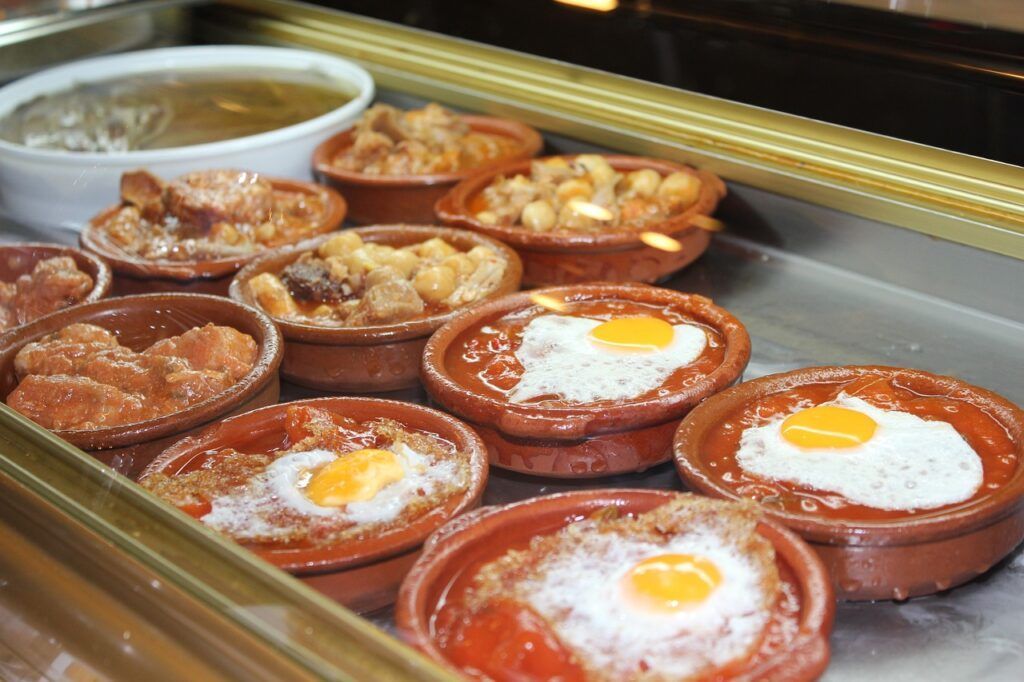
One of Spain’s most cherished traditions is “tapeo,” which involves visiting various bars to sample small portions of food, known as tapas. This custom not only allows people to savor the local cuisine but also encourages social interaction, as Spaniards highly value spending time with friends and family over a meal. In many cities, bars offer free tapas, while in others, they are available at a lower cost than a full meal.
7. Popular Festivals and Celebrations
Spain is renowned for its numerous festivals. From the Feria de Abril in Seville to the Fallas in Valencia and the Tomatina in Buñol, every region hosts its own lively celebrations filled with color, music, and local traditions. These festivals highlight the lively and joyful spirit of the Spanish people.
8. Football Fever
Football holds a special place in Spain—it’s more than just a game, it’s a passion. Clubs like Real Madrid and FC Barcelona inspire an almost fanatical following that extends beyond Spain’s borders. On match days, it’s common to see crowds gathered in bars or at home, passionately supporting their teams.
9. Common Expressions and Proverbs
Spanish in Spain is full of interesting expressions that might be hard for foreigners to grasp. Some of the most popular ones include:
• “Estar en las nubes” (to be lost in thought)
• “Ser pan comido” (to be a piece of cake)
• “Tener mala leche” (to have a bad attitude)
• “Montar un pollo” (to make a fuss)
Learning these phrases will help you sound more fluent and natural when speaking Spanish.
10. The Use of “Vosotros” and “Ustedes”
One major distinction between Spanish in Spain and Latin America is the use of “vosotros” to address a group informally. In Latin America, “ustedes” is used in both formal and informal contexts. If you want to speak like a Spaniard, it’s important to get accustomed to using “vosotros.”
11. Among the Curious Facts About Spain: Flexible View on Punctuality.
In Spain, being on time is more of a flexible concept, especially in social settings and casual get-togethers. Arriving 10 or 15 minutes late to meet friends is generally not a big deal. However, in professional environments, punctuality is more strictly observed.
12. The “Sobremesa” Tradition
After a meal, particularly a big one with family or friends, Spaniards indulge in what’s called “sobremesa”: a leisurely conversation around the table that can last for hours. This custom highlights the social nature of Spaniards and their appreciation for spending quality time with others.
13. Linguistic Diversity and Regional Accents
Spain doesn’t just have Spanish as its official language; it also recognizes other regional languages like Catalan, Galician, and Basque. Additionally, the accent can vary widely depending on the region. Studying Spanish in Spain gives you the opportunity to immerse yourself in these different linguistic forms and understand their regional distinctions.
14. Coffee and Wine as Everyday Rituals: Curious Facts About Spain.
Coffee and Wine as Everyday Rituals. Coffee, among other Curious Facts About Spain, is an essential part of life in Spain, with various ways to order it: solo, cortado, con leche, bombón, and more. Similarly, wine is deeply ingrained in Spanish culture and frequently accompanies meals and social occasions. Spanish wines are highly regarded worldwide, and tasting them is an integral part of the cultural experience when learning the language.
15. Bars Everywhere
Spain has one of the highest densities of bars per capita in the world. These are usually café-bars, where you can grab a coffee, tea, or soft drink early in the day, and later enjoy a beer or a glass of wine. Spaniards often spend a significant portion of their social life in bars and on terraces. In many cities, it’s easier to find a bar than a grocery store. Some neighborhoods even have several bars on the same street.
16. Bread with Almost Every Meal
Bread is a fundamental part of Spanish meals and is present at nearly every occasion, from breakfast to dinner. No good Spanish meal is complete without it.
17. Frequent Use of Diminutives
Using diminutives like “cervecita” (little beer), “cafecito” (little coffee), or “ratito” (little while) is very common in Spain, even when the item or action isn’t necessarily small. Spaniards often incorporate these cute, familiar forms into their everyday conversations.
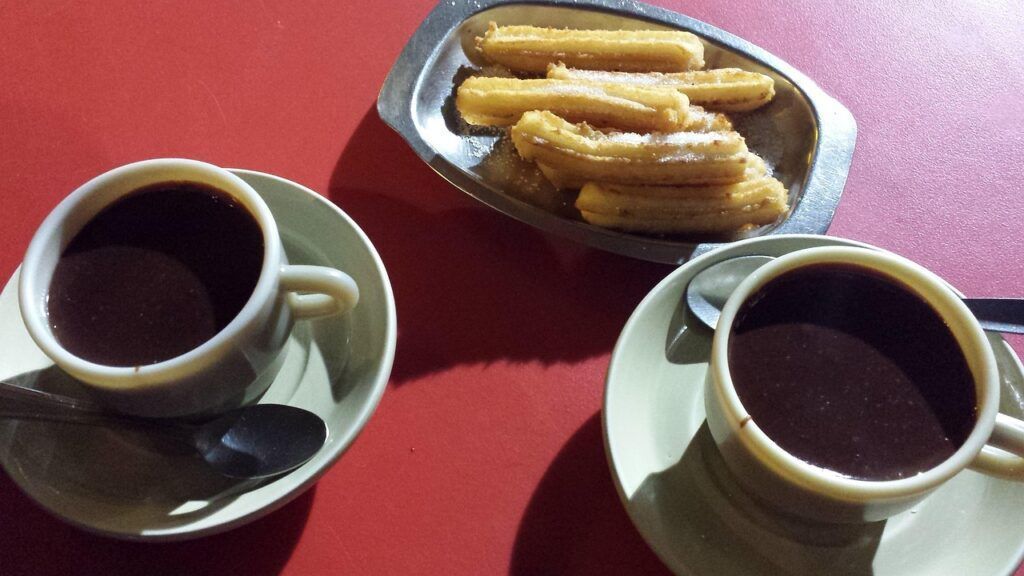
18. Chocolate with Churros
Chocolate with churros isn’t just a morning breakfast, particularly on weekends; it’s also enjoyed in the afternoon at a café-bar, often with friends or family. It’s also a common treat very early in the morning after a long night out partying.
19. Shop Names
It’s quite common to see shops with traditional names like “Casa Paco,” “Bar Manolo,” or “La Tienda de Pepa,” which reflect Spain’s strong family-oriented business culture.
20. Tipping Is Not Required
In Spain, leaving a tip is not mandatory, but it’s customary to leave a small amount if you feel the service was excellent. Often, people leave the change from what the waiter or waitress returns.
We hope you enjoyed this list of 20 interesting Curious Facts About Spain and the Spanish people. If you’re passionate about the Spanish language, don’t miss our blog, where we give you tips for practicing Spanish daily.
Aprende español con nuestros cursos y clases
- CEFR online Spanish courses
Spanish Online Course for Beginners – Level A1.1
110,00€ Select options This product has multiple variants. The options may be chosen on the product page - CEFR online Spanish courses
Spanish Course Level A1.2
110,00€ Select options This product has multiple variants. The options may be chosen on the product page - CEFR online Spanish courses
Online Spanish Course Basic Level – A2.1
110,00€ Select options This product has multiple variants. The options may be chosen on the product page